Book Review // Judges Volume Two edited by Michael Carroll
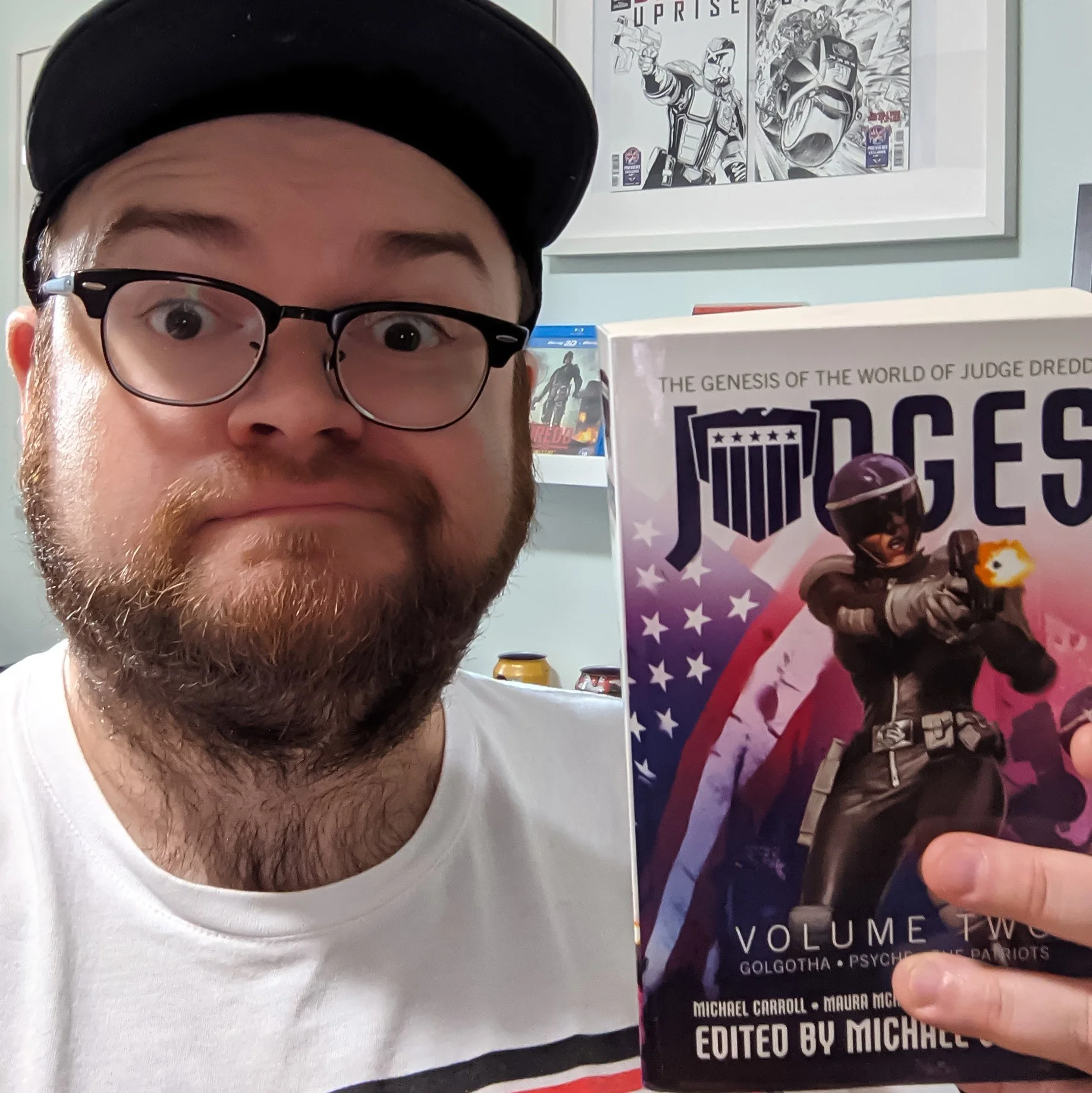
It felt like it was time to get back into the world of Judge Dredd (do I ever actually leave?).
I've got a few Dredd-related titles sitting around waiting to be read, but Judges Volume Two had been waiting the longest, so eventually it was going to have to be picked up, and I'm glad I did.
This series is an interesting little piece of the Judge Dredd universe because we're not following Dredd or the Justice Department we're familiar with. Instead, we're going back to the early days of the Judges and watching the system being built. Which is actually rather unsettling when you already know what it's going to become.
So, let's have a look.
The Details
Title: Judges Volume Two
Writers: Michael Carroll, Joseph Elliott-Coleman & Maura McHugh
Book Type: Paperback
Pages: 432
Published: May 26th, 2020
Publisher: Abaddon Books
Buy now using this Amazon affiliate link and help support the blog.
The Blurb
The second volume of the hit new series exploring the early history of 2000 AD’s all-powerful “Judges.”
The United States, 2041. Eustace Fargo's new justice system has been operating for eight years. The old police academies are closing, traditional policing is disappearing and the Judges are taking control. But things aren't necessarily getting better.
Unrest is growing, criminals are becoming more violent and the population is starting to realise that the new system comes with a very different definition of justice.
This volume collects three novellas exploring the rise of the Judges:
Golgotha by Michael Carroll
Psyche by Maura McHugh
The Patriots by Joseph Elliott-Coleman
And all three continue the story established in the first volume.
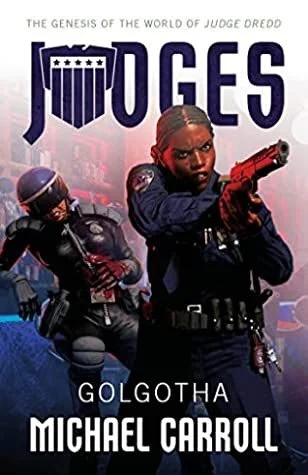
Golgotha
Michael Carroll
This is a great way to open the collection. Errol Quon has always wanted to be a police officer. Unfortunately for her, she's chosen possibly the worst time in American history to pursue that dream. The Police Academies are being shut down as the Judges take over law enforcement, and Quon becomes the last police officer to graduate.
She's assigned to Golgotha, Alabama, one of the few places still willing to have a traditional police force, and partnered with Judge Unity Kurzweil. What follows is part police procedural, part character story and part history lesson about the changing world. I really enjoyed this one.
There's something quite depressing about watching the old system slowly disappear. The Judges aren't simply arriving and taking over; they're actively replacing everything that came before them, and Quon is standing right in the middle of it.
She's a reminder that the old system wasn't necessarily perfect, but it was still made up of people. People who had relationships with their communities and understood that sometimes justice isn't as simple as handing someone a sentence. The Judges don't have that same connection, and that might eventually become their biggest weakness.
I also really liked Errol as a character. Carroll does a great job of making you want to spend more time with her, which is always a good sign for me. Golgotha is a fantastic opening story and probably my favourite of the three. It made me want more stories about the last generation of traditional cops and the first generation of Judges.
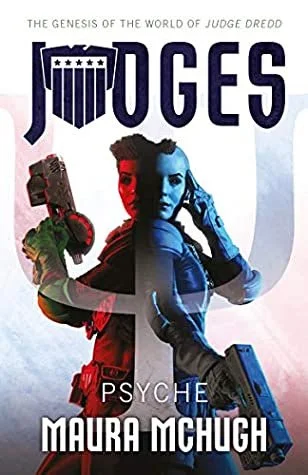
Psyche
Maura McHugh
Psyche takes us into the creation of something that will eventually become a huge part of Mega-City One: Psi Division. This story jumps between two timelines. In 2044, Phoebe Wise has joined the Judge programme. Still, the Department has very different plans for her, whilst in 2141, Psi Judge Pam Reed is investigating the ruins of the past when she discovers something that shouldn't still exist. The two stories eventually become connected across the decades.
I really enjoyed this one. The jumping between timelines could easily have become confusing, but McHugh handles it well, and I found myself increasingly invested in both stories. More importantly, it gives us another piece of the puzzle. We're watching the Justice Department experiment, we're seeing new ideas being tested, and we're seeing people being identified for abilities that the Judges don't fully understand yet.
And we know where this is heading. That's one of the things I really like about this series. You get to watch the foundations being laid for things that become completely normal in the Judge Dredd universe.
In the future Psi Division is eventually just there, but here, we're seeing the beginnings, and that makes the world feel much bigger.
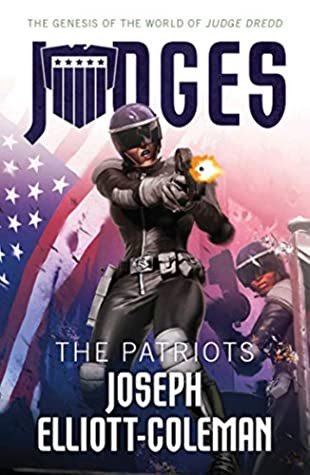
The Patriots
Joseph Elliott-Coleman
The final story in the collection takes us to 2047, where the Judges are now firmly established. But there's a problem: People don't particularly like living under a dictatorship.
A group calling themselves “The Patriots” is fighting back against the Judges, using radical methods to turn ordinary citizens into violent killers. Judges Charlotte Clarkson and Niamh Douglas are assigned to find the source of the threat and shut it down.
This is a much darker story. There's a growing feeling throughout the book that the Judges have crossed a line, but there's also the uncomfortable knowledge that we already know how this ends.
The Patriots fail. The Judges win. And, in doing so, the Judges become even more powerful. That's what makes some of the events here particularly disturbing. The actions of the Patriots actually help strengthen the system they're fighting against. It's a horrible little example of how a government can use fear and violence to justify taking even more control, and once again, we're watching another piece of the Judge Dredd universe being built. We start seeing the creation of Sector Houses!
There are also some nice little nods in this story; the Soviets get a mention, and there are links back to Psyche. The arms manufacturer, Thurgood, returns to the story, and everything is starting to connect and come together. Then there's the moment where the general population finally begins to understand exactly how much power they've handed over. That's the truly scary part. Not that the Judges are evil cartoon villains. It's that the people gave them the power. They did it because they wanted safety, order and an end to crime, and once the system is established, taking that power back becomes almost impossible.
That's a bloody frightening thought.
Watching the Judges Rise
That's probably what I enjoyed most about Judges Volume Two. It's not really about the Judges being superheroes. It's about watching a political and social system being created. The first volume established the early stages. This one takes things further. The police disappear, the Judges expand, Psi Division begins, Sector Houses appear, opposition groups emerge, and ordinary people slowly realise that America isn't going back to the way it was.
The really clever part is that we, as readers, already know where this is going. We're essentially watching the birth of Mega-City One and the Justice Department from the outside, and knowing the future makes some of the decisions being made here even more uncomfortable.
Final Thoughts
I really enjoyed Judges Volume Two. All three stories are solid, but Golgotha was the standout for me. Errol Quon is a great character, and I genuinely wanted more of her story. Psyche gives us some excellent world-building around Psi Division, while The Patriots provides a bleak and rather disturbing look at what happens when people finally realise just how much freedom they've surrendered and that's really the strength of this series.
It's not simply giving us Judge Dredd stories set in the past. It's showing us how the world of Judge Dredd was created. We're seeing the cracks appear. We're watching the old world disappear, and we're watching the Judges become something much bigger than the law enforcement experiment they started as. For a Dredd fan, there's something bloody fascinating about that.
Now I've just got to find out what happens next and, of course, while reading it I couldn't help thinking about Sector 102.
Sector 102 Thoughts
There's plenty here that could be stolen for Sector 102. The biggest thing isn't a particular character or event. It's the idea of watching institutions evolve. Sector 102 doesn't need to have always been the way it is. Maybe the Sector House originally operated very differently. Maybe there are old records showing when certain Justice Department divisions arrived. Maybe there are retired Judges on Long Walks who remember how the sector was before the Chaos Bug, and the rise of Kelp Pharmacy.
I particularly like the idea of old police forces or law enforcement organisations being absorbed into the Judges. I could have forgotten precinct buildings buried beneath the modern city, with old badges, paperwork and equipment still sitting inside. Maybe even an undercity police force gang of troggies?
Then you've got the idea of terrorist groups accidentally strengthening the system they're fighting. That feels very Judge Dredd. A group attacks the city. The Justice Department responds. New security measures are introduced. More surveillance. More checkpoints. More Judges. The citizens complain and rebel. Another attack happens, and the cycle continues.
Before long, everyone has forgotten what life was like before the restrictions, and perhaps the most interesting part for Sector 102 is that the characters living there don't necessarily see this happening. They're just living their lives. Until one day someone finds an old photograph, an archived news report or a forgotten police badge and asks: "What the hell happened to these people?"
That's the sort of background history I want Sector 102 to have. Not everything needs to be explained. Sometimes it's more fun to find the bones of an older city buried underneath the one we're playing in, and Judges Volume Two has given me a few more bones to dig up.
Final Verdict
A really enjoyable continuation of the Judges series. Golgotha was my highlight, but all three stories add something to the bigger picture. If you're interested in the history of the Judges and how the world of Judge Dredd eventually becomes the dystopian Mega-City One we know, this is definitely worth a read.
Now, where's Volume Three?