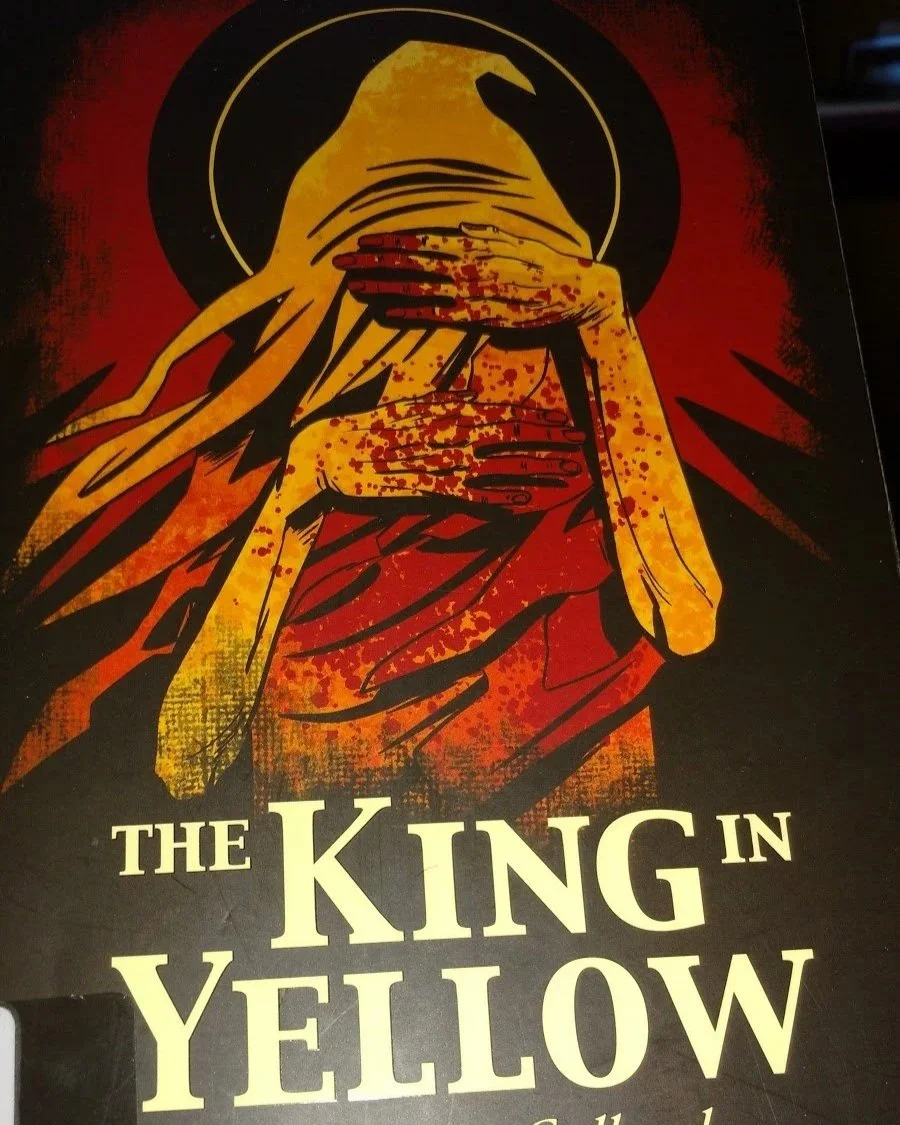
What if simply reading a play could drive you mad? Not because of some terrible performance or questionable acting, but because the words themselves contain something so disturbing that your mind simply cannot cope with what you've discovered.
Welcome to the world of The King in Yellow!
It's time for another creepy comic review, and we're heading back into the world of weird fiction, unsettling mysteries and things that perhaps are best left undiscovered.
I've been a fan of H.P. Lovecraft and his Mythos for a long time. The idea of ancient, unknowable beings and monstrous forces lurking beyond our understanding, tormenting us mere mortals, has always appealed to me. There's something wonderfully unsettling about the thought that humanity might be little more than an insignificant speck in a much larger and darker universe.
Through reading about Lovecraft and his influences, I've become increasingly interested in the writers who helped shape the weird fiction that followed. One such writer was Robert W. Chambers, whose work The King in Yellow is often associated with the same unsettling territory that Lovecraft would later explore.
So, when I came across this graphic novel adaptation by I.N.J. Culbard, I couldn't resist giving it a go. Let's take a look!
The Details
Title: The King in Yellow
Original Author: Robert W. Chambers
Adapted and Illustrated by: I.N.J. Culbard
Publisher: SelfMadeHero
Format: Hardback Graphic Novel
Page Count: 143 pages
Publication Date: 2015
The Commercial Fluff
Robert W. Chambers' The King in Yellow is a collection of weird fiction connected by the appearance of a mysterious and forbidden play. Those who read its second act are said to risk descending into madness, becoming consumed by the strange and disturbing world it reveals.
It's a wonderfully creepy idea, and one that has gone on to influence generations of horror writers.
I.N.J. Culbard's graphic novel adaptation brings together four of the original stories:
The Repairer of Reputations
The Mask
The Yellow Sign
In the Court of the Dragon
Rather than simply presenting four separate tales, Culbard uses a central character, Jack Scott, to help tie the stories together into a single narrative.
The Review
I really enjoyed this one! As I mentioned earlier, I'm a big fan of Lovecraft and the wider Mythos, so exploring some of the writers who influenced him is something I've been keen to do. Chambers is an obvious name to investigate, and this graphic novel has certainly given me a reason to seek out the original collection. One of the things I particularly enjoyed was how Culbard approached the adaptation. Rather than simply reproducing the four stories as separate pieces, he uses Jack Scott as an anchor, bringing the different story arcs together into a more connected narrative.
It gives the graphic novel a sense of continuity and helps the whole thing flow nicely from one tale to the next. There are a few changes and adjustments along the way, but I felt these worked well in the graphic novel format. Nothing particularly jarred with me, and the overall experience felt like a worthy retelling of Chambers' work. The central idea of The King in Yellow is fantastic, too. A mysterious play that supposedly drives its readers mad is exactly the sort of concept that gets my imagination working. There's something particularly disturbing about the idea that a piece of writing could contain knowledge or revelations that the human mind simply isn't equipped to understand.
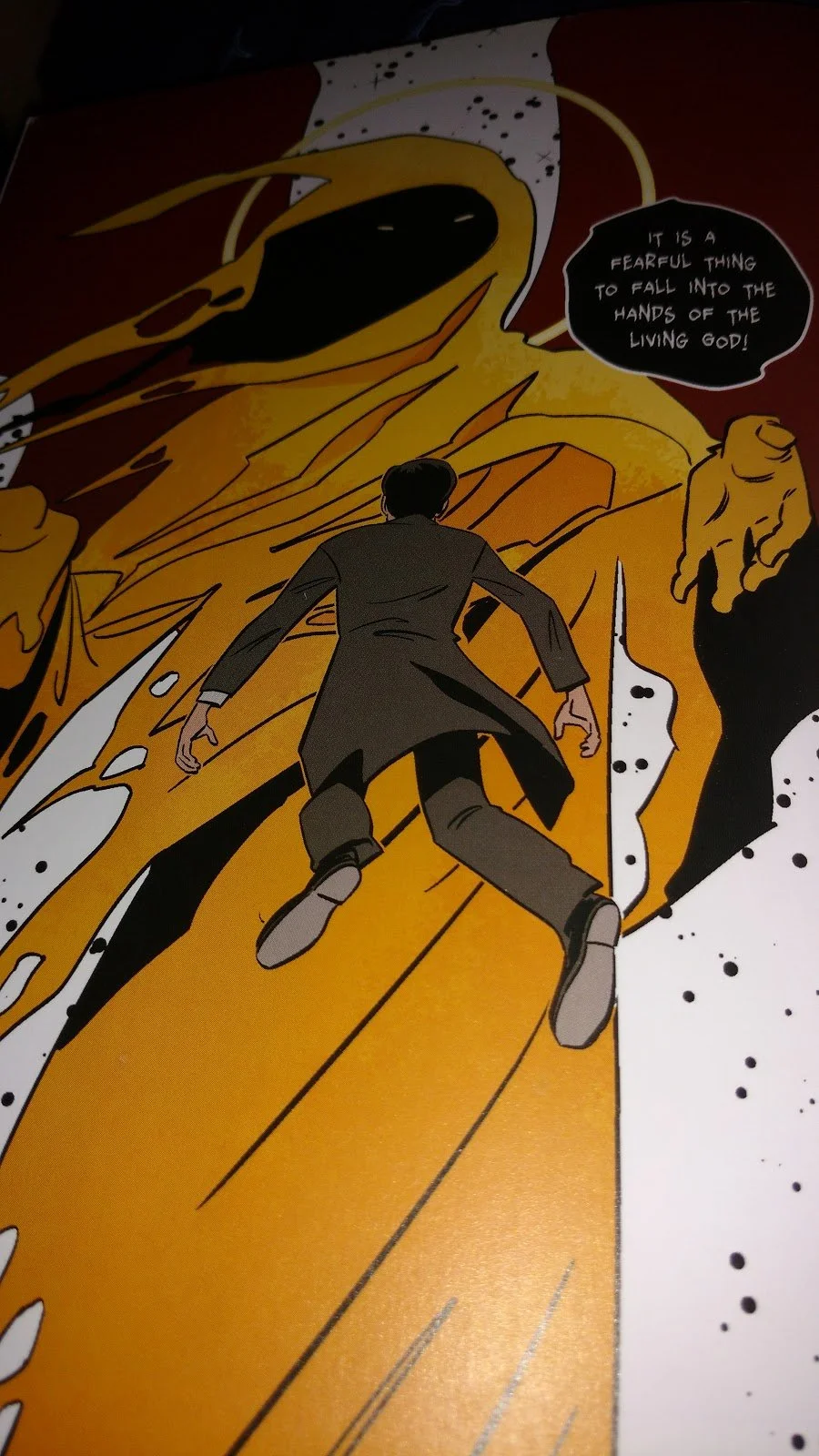
It's that combination of the strange, the supernatural and the psychological that I enjoy so much about this type of horror, and then there's the artwork.
Culbard's illustrations are atmospheric and beautifully coloured, creating a wonderfully unsettling mood throughout the book. There are some excellent panels, and a few moments genuinely managed to creep me out. That's always a good sign when you're reading a horror graphic novel! The colours and visual style really help establish the tone of the stories. There's an underlying sense that something isn't quite right, even when the characters themselves haven't fully realised what they're dealing with.
I also found myself becoming increasingly intrigued by some of the themes running through the different tales. There's enough here to make me curious about the original source material, and that's probably the biggest compliment I can give an adaptation. It's left me wanting to go back and read Chambers' original collection, which is something I hadn't necessarily planned on doing when I picked this up.
Final Thoughts
Overall, I found The King in Yellow to be a worthy and enjoyable adaptation of Robert W. Chambers' work. Culbard has taken four stories and woven them into a connected narrative that works well in graphic novel form. The artwork is atmospheric, the colours are beautiful, and there are some genuinely creepy moments that make this a great little read for anyone who enjoys weird fiction and cosmic horror.
More importantly, it's introduced me to a writer whose original work I now want to explore. I've always enjoyed following the influences behind Lovecraft and discovering the stories that helped shape the genre, and Chambers looks like another author worth adding to the reading pile.
So, another successful creepy comic adventure!
Have you read Robert W. Chambers' The King in Yellow? I'd love to hear what you thought of the original stories, and whether you think Culbard's adaptation does them justice.
Drop your thoughts and recommendations in the comments below. And if you enjoy these little adventures into the strange and unusual, don't forget to hit that follow button!
Cheers for reading, and I'll see you on the next adventure!